
Unlocking Potential: The Impact of Progressive Carries in Football Scouting
Understanding Progressive Carries
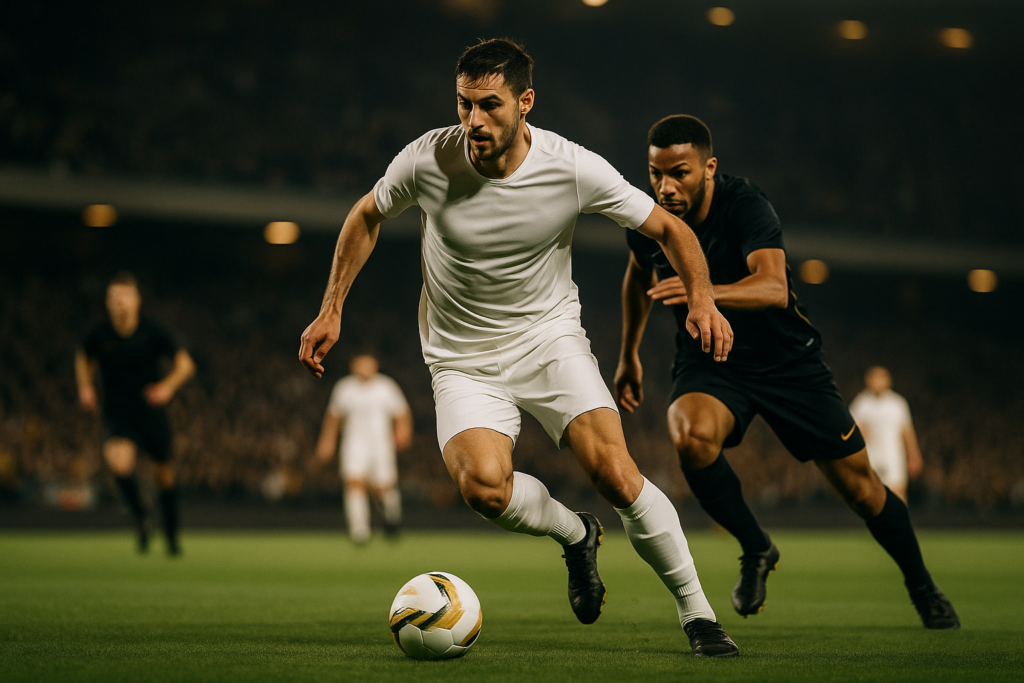
Progressive carries—those moments when a player drives the ball forward, weaving through opposition players with a blend of skill and purpose—are more than just a display of individual talent; they’re a tactical cornerstone in modern football. These actions not only advance the ball but also create space, disrupt defensive structures, and shift the momentum of a game. It’s the subtle art of moving the game forward, often underappreciated yet critically important.
Take a player like Jack Grealish. His ability to carry the ball into dangerous areas while maintaining close control is a weapon that Manchester City utilizes to perfection. He doesn’t just dribble; he scans, assesses, and makes calculated decisions that break lines. It’s this blend of technique and football intelligence that modern scouts must prioritize.
The Tactical Relevance
Progressive carries are vital in today’s tactical setups, especially against teams that sit deep. When faced with a compact defense, the player who can penetrate the lines opens up a kaleidoscope of attacking options. For instance, when Chelsea deploys their wing-backs, the progressive carries from the central midfielders or forwards can pull defenders out of position, allowing for overlaps or diagonal runs.
In essence, it’s about timing and space occupation. A well-timed carry can draw defenders and create channels for teammates. The best players don’t just carry for the sake of carrying; they do so with purpose, scanning for opportunities, looking for the right moment to release the ball or take on a defender.
Decision-Making Under Pressure
Decision-making is where the true genius of progressive carries shines through. Consider the likes of Kevin De Bruyne, who often initiates these carries not just to advance play but to manipulate defensive shapes. His ability to read the game, combined with his vision, allows him to know when to carry, when to pass, and when to shoot.
The nuances of body orientation play a crucial role here. A player who can carry the ball while maintaining a forward-facing stance is far more effective. This positioning allows for quick changes in direction and immediate awareness of surrounding players. It’s a skill that separates the good from the exceptional.
Pressing Triggers and Tempo Control
In the realm of pressing systems—think Liverpool under Jürgen Klopp—progressive carries can be a double-edged sword. A successful carry can lead to quick transitions and exploit disorganized defenses. Conversely, a poorly timed carry can result in loss of possession and an immediate counter against a team that thrives on exploiting spaces left behind.
Tempo control is another aspect where progressive carries prove their worth. A player who can carry the ball effectively often dictates the rhythm of play. By accelerating into space, they can either stretch a defense or slow down the game, frustrating opponents and creating opportunities for teammates to reposition.
Comparative Football Cultures
When we look at different football cultures, the emphasis on progressive carries can vary. In South American football, for instance, the individual flair and creativity shine through with a heavy reliance on skillful carries. Players like Neymar exemplify this, using their dribbling to create chaos in opposing defenses.
In contrast, European football often emphasizes the collective—how well a player can integrate their carries into the team’s tactical framework. This is evident in the ever-evolving systems of coaches like Pep Guardiola, who demands that players not only execute carries but do so while adhering to positional play principles.
Real Match Situations
Let’s consider a match scenario: a tightly contested fixture where the score is level, and the clock is winding down. A player like Mason Mount, with his ability to carry the ball effectively, may find a pocket of space between the lines. His decision to drive forward draws defenders, creating a gap for a teammate making a late run into the box. This split-second decision, coupled with the execution of a progressive carry, could very well be the difference between a draw and a last-minute victory.
PortalFute Scout Perspective
As a scout, recognizing the potential of progressive carries is crucial. When evaluating players, focus not only on their dribbling ability but also on their decision-making processes, tempo control, and how they read the game. Pay attention to their body orientation and scanning habits—these traits often indicate a player’s tactical intelligence. Look for those who can not only advance the ball but do so in a way that transforms the game, making them invaluable assets for any team aiming to dominate in modern football.
In the end, progressive carries are more than just individual brilliance; they’re a strategic element that can unlock defenses, shift momentum, and ultimately lead to success on the pitch.